
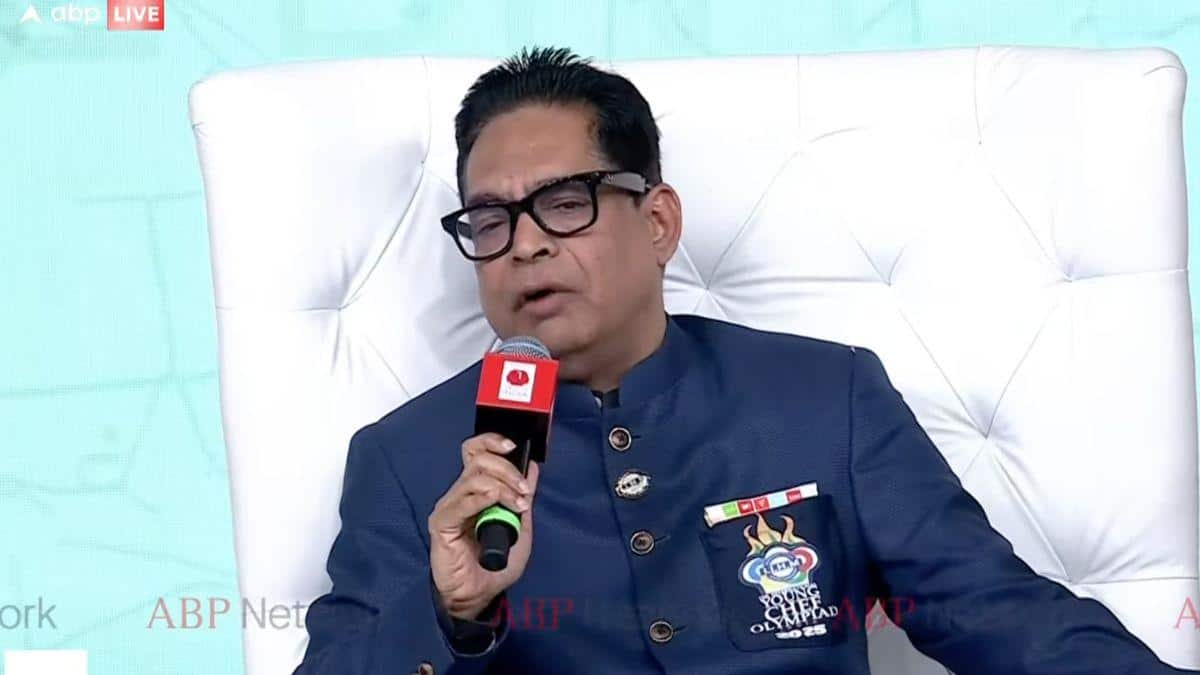
<p>Artificial Intelligence is not merely transforming industries, it is redefining how human beings think, work and interact. At ABP Network’s Ideas Of India Summit 2026, Dr Suborno Bose places that transformation in sharp focus, calling AI “the biggest idea of our times”.</p>
<p>Speaking in a session titled ‘AI in Hospitality: What Happens to the Human Touch?’, moderated by author Chetan Bhagat, Dr Bose frames AI not as a distant technological shift but as a present and permanent reality.</p>
<h2><strong>From Tech Revolution To Idea Revolution</strong></h2>
<p>“AI is no more something futuristic, it is not a tech revolution, it is an idea revolution. It is an idea upgrade,” Dr Bose says during the session. According to him, AI is not simply about automation or efficiency; it represents a fundamental change in how society approaches intelligence itself.</p>
<p>He argues that for the next 50 to 100 years, people will live with AI as an integral part of their daily lives. The debate, therefore, is not about resistance but adaptation.</p>
<p>In the context of hospitality, an industry traditionally built on warmth, personalisation and emotional intelligence, the central concern is whether machines can coexist with human service without eroding it.</p>
<h2><strong>Is Hospitality Safe From AI?</strong></h2>
<p>Addressing the question directly, Dr Bose dismisses fears of wholesale displacement.</p>
<p>“AI will never replace human beings, the chefs or the doctors,” he asserts.</p>
<p>Instead, he outlines how AI is already enhancing guest experiences. Hotels are developing systems where guests can choose not just a category of room, but the exact floor and room they wish to stay in. Technology allows travellers to pre-order meals before arrival and have them ready regardless of check-in time.</p>
<p>These changes, he suggests, are not about replacing service professionals but elevating convenience and improving quality of life within the hospitality ecosystem.</p>
<p>The larger shift lies in using data and predictive tools to anticipate needs while preserving the human element that defines the sector.</p>
<h2><strong>AI In Education And Skill Development</strong></h2>
<p>Dr Bose extends the conversation beyond hotels and restaurants to education, a sector he has helped shape for more than two decades.</p>
<p>He believes AI can simplify learning across levels and disciplines, enabling customised teaching methods and faster knowledge dissemination. However, he raises a philosophical concern, “Why will kids want to learn if intelligence is going to become so easily available and be so cheap?”</p>
<p>The question reflects a deeper anxiety about motivation in an age of instant answers.</p>
<h2><strong>India’s Edge: Youth, Scale And Values</strong></h2>
<p>In a broader geopolitical and economic context, Dr Bose identifies three structural advantages for India: youth, scale and values.</p>
<p>He argues that India’s demographic dividend, its vast market size and a comparatively strong value system position it uniquely in the AI era. Ethical use, he says, will determine the trajectory of this technology.</p>
<p>“Ethical AI is the answer. What AI is going to do is that AI is a power we are going to get, we have to use it in the right way, not unethically, but ethically.”</p>
<p>For Dr Bose, the future is not about rejecting AI, but about shaping it responsibly. He calls for India to take leadership in adopting and guiding AI development rather than remaining a passive consumer of global technological trends.</p>
<h2><strong>Ideas Of India 2026: The New World Order</strong></h2>
<p>The session unfolds at the fifth edition of the Ideas of India Summit, held on February 27 and 28, 2026, in Mumbai. This year’s theme, ‘The New World Order’, explores India’s journey towards becoming a developed nation by 2047, alongside conversations on technology, economic resilience and global realignments.</p>
<p>As AI reshapes industries from hospitality to education, the discussion underscores a defining tension of our time: how to combine high-tech capability with higher-touch humanity.</p>
<p>For Dr Bose, the answer lies not in resisting change, but in ensuring that innovation remains anchored in ethics, empathy and national vision.</p>
About The Author


