<p><span style=”font-weight: 400;”>When guests gathered for Jaideep Sharma’s wedding reception in Ajmer, many expected the usual wedding montage featuring photos of the couple. Instead, they saw something unexpected. On the screen appeared Sharma’s father, who had died more than a year earlier, smiling and offering blessings to the newlyweds. </span></p>
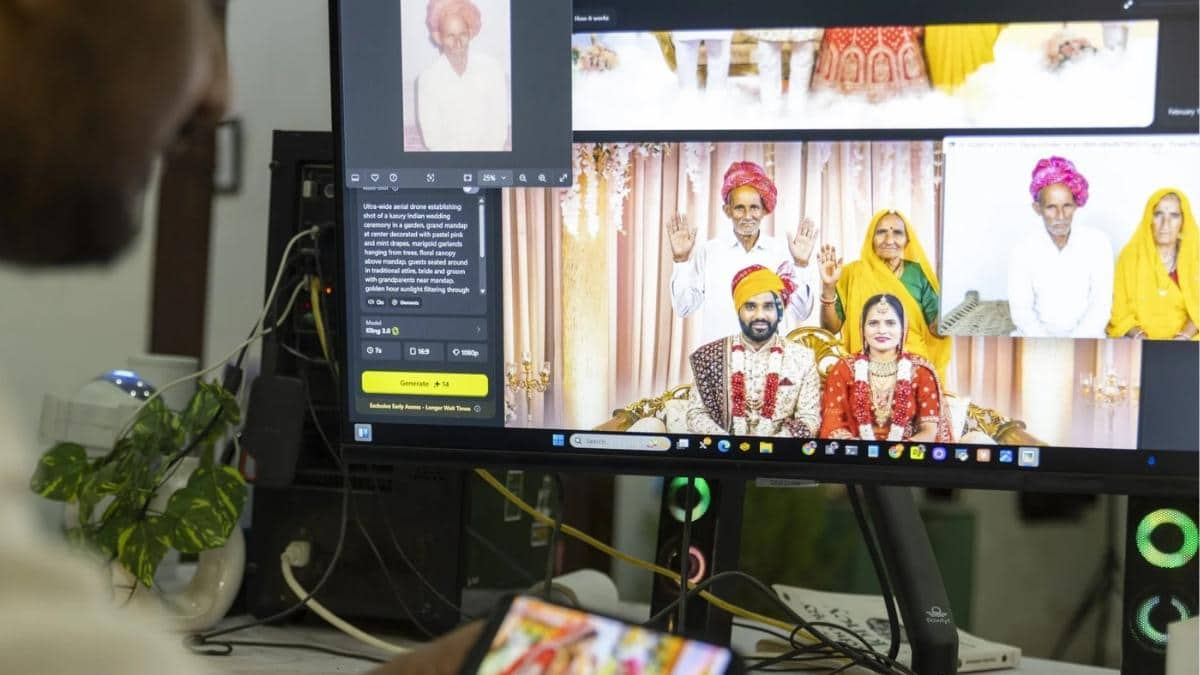
<p><span style=”font-weight: 400;”>The emotional video was not an old recording. It had been created using artificial intelligence by a creator Sharma discovered on Instagram. The story, first reported by Rest of World, shows how AI tools are now being used in India to recreate the presence of loved ones who are no longer alive during important family events.</span></p>
<h2><span style=”color: #ba372a;”><strong>How AI Deepfakes Are Recreating Loved Ones For Family Occasions</strong></span></h2>
<p><span style=”font-weight: 400;”>According to Rest of World, the video shown at Sharma’s wedding reception took about a week to create and cost around 50,000 rupees. Using photographs of Sharma’s father, the creator produced a one-minute clip that looked realistic enough to surprise many guests at the event.</span></p>
<p><span style=”font-weight: 400;”>“It was like a bombardment of emotions for everyone,” Sharma, a 33-year-old garment trader, told Rest of World. “He was like a central force in the entire family. So when the video played, everyone was very happy and emotional at the same time.”</span></p>
<p><span style=”font-weight: 400;”>The use of AI deepfakes for personal events is slowly growing across India. Families are using the technology to recreate deceased relatives, clone voices of loved ones, or digitally include people who could not attend celebrations. Tools such as OpenAI’s Sora, Google’s Nano Banana, and Midjourney have made it easier to produce realistic-looking images and videos.</span></p>
<p><span style=”font-weight: 400;”>Creators in smaller towns are learning to use these tools through online tutorials and social media platforms, turning the skill into a new business opportunity.</span></p>
<h2><span style=”color: #ba372a;”><strong>Why AI Deepfake Creators Are Finding New Opportunities In India</strong></span></h2>
<p><span style=”font-weight: 400;”>One such creator is Akhil Vinayak from Thiruvananthapuram, who initially posted deepfake videos of deceased actors on Instagram for entertainment. According to the Rest of World, a client once approached him with a personal request. She asked if he could create a video of her late mother-in-law blessing her newborn baby.</span></p>
<p><span style=”font-weight: 400;”>“She wanted to surprise her husband,” Vinayak told Rest of World. “Her mother-in-law had passed away before the baby was born.”</span></p>
<p><span style=”font-weight: 400;”>Vinayak created a video showing the woman meeting the baby for the first time. The family reaction video later gained more than one million likes on Instagram. He usually charges about 18,000 rupees for a one-minute AI-generated clip.</span></p>
<p><span style=”font-weight: 400;”>However, experts warn that while such videos may help families cope with grief, they could also blur emotional boundaries. Bhaskar Malu, a Delhi based behavioral scientist, told Rest of World that AI-generated stand-ins are emerging partly because social rituals often expect the presence of family members.</span></p>
<p><span style=”font-weight: 400;”>“In cultures like ours, where social rituals demand physical, or at least symbolic presence, especially during weddings and funerals, AI-generated stand-ins are a response to real emotional pressures,” he said.</span></p>
About The Author