
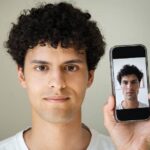

Britain’s well-known writer and journalist Isaac Tompkins took an ordinary selfie with his phone camera and handed it over to an AI chatbot. He said – ‘Make me a little more beautiful.’ Within seconds, a face appeared on the screen that was indeed his own, but it had a magical charm. Its nose was perfectly straight and the eyelids were slightly lifted. When Isaac took this picture to London’s famous cosmetic surgeon Dr. Alex Karidis, the doctor smiled and said, ‘The changes are minor, but the cost of turning this into reality would be around 25 lakh rupees.’ Isaac’s experiment illustrates the bitter reality that plastic surgeons worldwide are grappling with. This new trend has been named ‘AI Face’. Nora Nugent, President of the British Association of Aesthetic Plastic Surgeons, explains that patients come to her clinic every day carrying unrealistic images created by chatbots, insisting they want to look exactly like them. Their demands are… glass-like flawless skin, sculpted cheekbones, and facial symmetry that is simply not naturally possible in the human body. It didn’t stop there. He asked the chatbot to give him the most handsome and masculine look on the internet. Dr. Karidis was also amazed to see the image that AI created. The chatbot recommended heavy jaw surgery, cheek fat removal, and several implants. The doctor said seriously, ‘This is absurd and frightening. You would have to spend 1 crore rupees for this imaginary face, and still there’s no guarantee you’ll look like that. On the contrary, your real face will also deteriorate with age.’ Dr. Julian says, ‘Recently in a video, a doctor was seen claiming that surgery would make the patient look 30 years younger. But upon careful observation, it was revealed that the patient had six fingers on their hand. It was clear that this was created by AI.’ Dr. Julian says, ‘Everyone wants to look beautiful, but the human body is not pixels; AI’s illusion can cause permanent damage that no surgeon can fix.’ Changing pixels on screen is easy Dr. Karidis says that AI can change each pixel on a computer screen at will, but surgery does not work at this microscopic level. Meanwhile, Dr. Julian De Silva explains the scientific reason behind this: if one eye of a person is a few millimeters higher or lower than the other eye, AI will fix it in a second. But in reality, the eyes are set in the sockets of the skull bone, with the brain right behind them. Moving those bones through surgery can be life-threatening.
The post Trend of facial makeovers based on chatbot suggestions grows:Surgeon says it is life-threatening appeared first on Tri-Cities India.
About The Author

